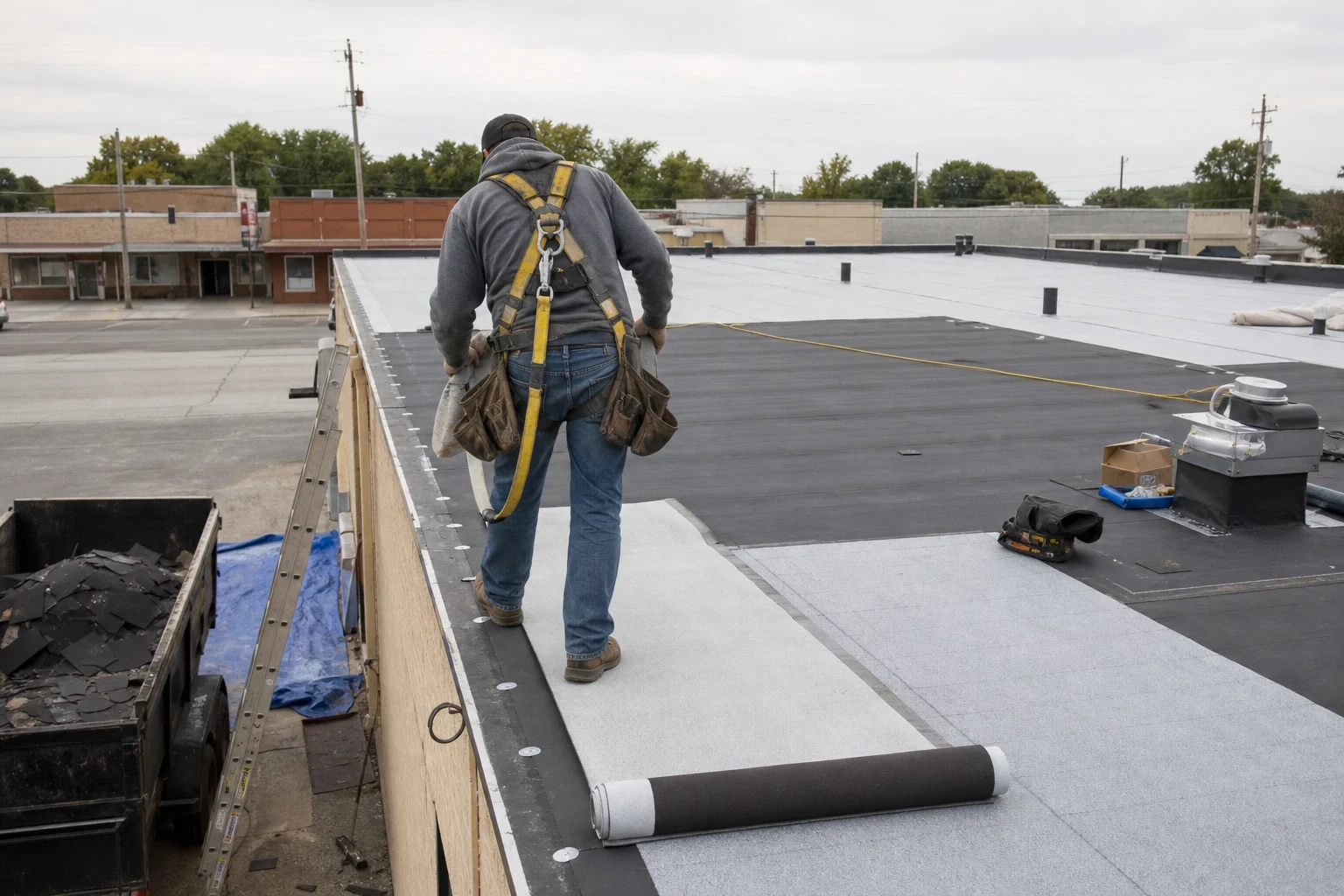
ServicesCommercial Roof Replacement
Commercial Roof Replacement in Blanchard
We tear off and rebuild low-slope and metal roofs on shops, offices, churches and warehouses. Before we recommend a new roof, we cut cores and check the insulation for moisture, so you know whether the membrane is truly finished or whether a repair will carry it for years.
When a Commercial Roof Is Truly Finished
On most commercial buildings, the first leaks show up in familiar spots: seams, penetrations, flashing at curbs, and the metal along the edges. Fixing those is repair work. Replacement is the right move once the trouble sits under the membrane, such as soaked insulation, a rusted or soft deck, or a membrane so stiff that every patch causes another crack.
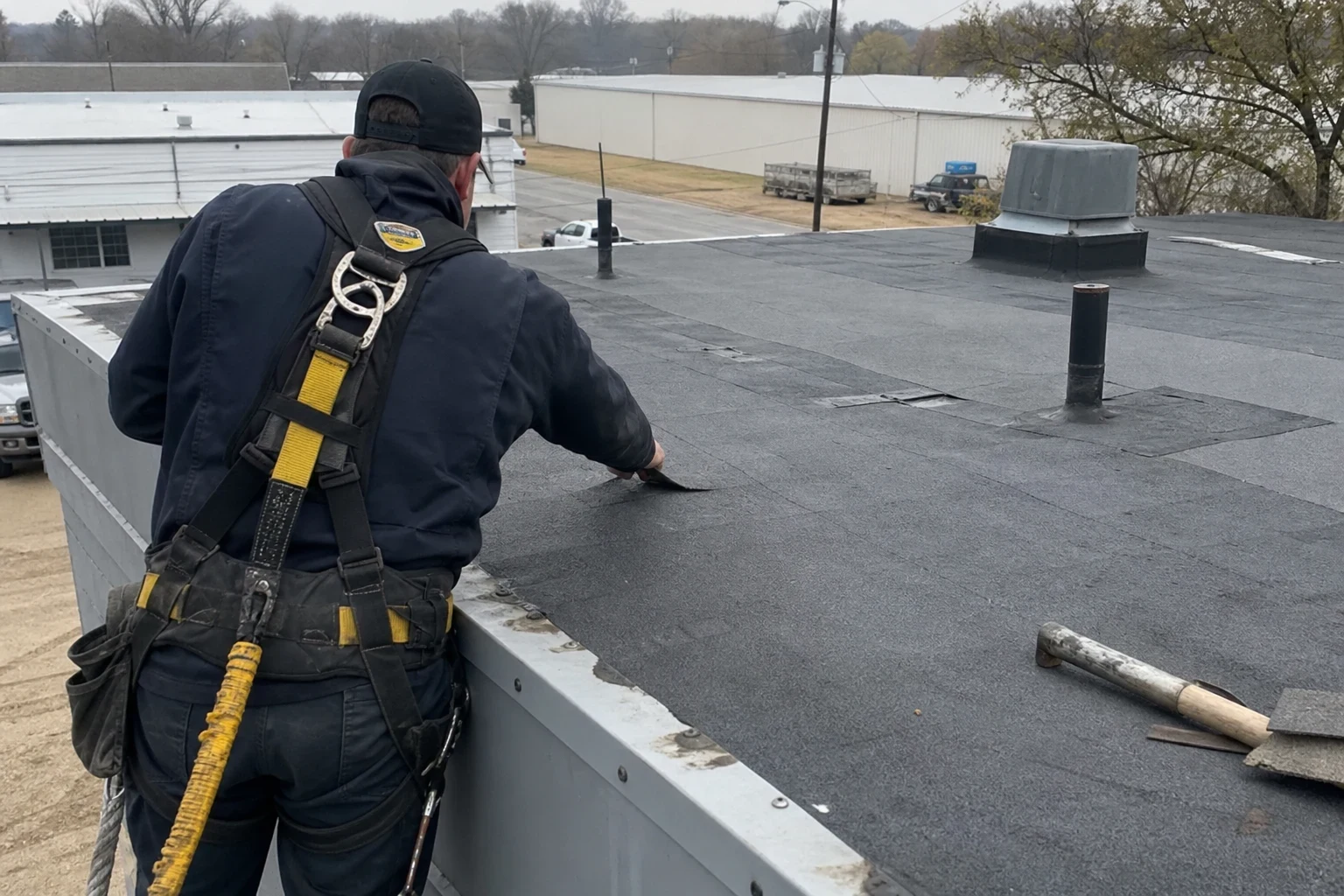
Sorting out which of those you have comes first. When a focused fix makes sense, we tell you that and send you to our commercial roof repair work. When the cores show soaked polyiso or a deck that is giving out, we go over what we found, share the photos, and explain your reroof choices.
Our Oklahoma commercial roofing license and Oklahoma general contractor license both come into play when a job includes deck repair, framing or curbs for rooftop equipment.
What a New Commercial Roof Includes
- Tear-off or recover decision
- Building code generally allows one new roof over an existing one only if the old system is dry and sound. If cores show wet insulation, or there are already two roofs on the building, we tear off to the deck.
- Deck inspection and repair
- With the old roof off, we check steel deck for rust-through and wood deck for rot or delamination. Damaged sections are cut out and new panels fastened in before any insulation goes down.
- Insulation and tapered slope
- We install new polyiso board, often with tapered panels and crickets that push water toward drains and scuppers. Correcting slope is the most direct way to stop ponding, which shortens the life of any membrane.
- Membrane system
- We install TPO, EPDM, modified bitumen or metal panels, chosen for your building's use, foot traffic and budget. Seams are heat-welded, taped or torched according to the system, then probed.
- Flashings, edge metal and drainage
- Curbs, pipe boots, parapet walls and edge metal get new flashing tied into the membrane. Drains, scuppers and gutters are cleared or renewed so water leaves the roof as designed.
Signs Your Building Is Due for a New Roof
Leaks that return after repair
When patched areas keep leaking in new spots nearby, water is usually traveling through wet insulation under the membrane. Surface repairs cannot dry that out.
Soft or spongy spots underfoot
A roof that gives when you walk on it usually has crushed or saturated insulation, or a weakened deck. Either way, the layers below need to come out.
Standing water two days after rain
Persistent ponding means the deck has sagged or the original slope was never adequate. A full tear-off lets us rebuild the slope with tapered insulation.
Brittle, cracked or shrinking membrane
Older EPDM pulls away from parapets as it shrinks, and aged modified bitumen alligators and cracks. Once the material itself is breaking down, patches do not hold.
Widespread hail bruising
Hail can fracture the insulation board beneath a membrane even when the surface looks intact. After a hard Oklahoma hail season, cores tell you how far the damage goes.
What Drives the Price of a Commercial Reroof
With a low-slope roof, what sits under the surface shapes the price more than the membrane on top. We hold off on any numbers until the cores have been read, so your scope fits your building rather than a typical one.
Tear-off versus recover
A recover, where code permits it, avoids removal and hauling. Tearing off costs more, but it uncovers the deck and starts the whole system fresh.
Deck condition
Rusted steel or rotten wood deck gets cut out and replaced one section at a time, and nobody knows how much until the old roof comes off. Any allowance for it is spelled out in your written scope.
Membrane and insulation choice
Material and labor prices vary between TPO, EPDM, modified bitumen and metal. Thicker insulation for more R-value, or a tapered system, raises the price but reduces ponding and energy loss.
Penetrations and rooftop equipment
Each HVAC curb, vent, skylight and drain gets flashed on its own. Units that must be lifted or disconnected mean working alongside your mechanical contractor.
Access and staging
How tall the building is, whether a crane is needed, and how much room the lot has for materials all change the labor hours.
How the Job Runs
- 1
Roof survey and core cuts
We cover the whole roof, take photos of the seams and flashings, and pull core samples to read every layer. We patch each core before we leave that day.
- 2
Written scope and options
Your scope is itemized: tear-off or recover, deck repair, insulation, membrane, and flashing details. Each line comes with the reason it is needed.
- 3
Permit and scheduling around your business
We handle the permit and split the roof into sections, so every night the building is sealed against weather. When we can, the loud tear-off work is scheduled around your business hours.
- 4
Installation in dried-in sections
We only remove as much old roof as we can replace the same day. Debris drops directly into a dumpster or trailer kept clear of your doors and parking.
- 5
Final walk and inspection
We test the seams, look over the drains and flashings, and tour the completed roof with you. The permit inspection is the last step.
Questions About New Commercial Roofs
Can the new roof go over the existing one?
In some cases. Code usually permits one recover on top of an existing roof when the old system is dry, firmly attached, and not already a second layer. Cutting cores shows us whether your roof meets that bar. Covering wet insulation locks the moisture in, and the new roof gives out early.
What membrane should my building have?
Many owners pick TPO for its reflective top and heat-welded seams. EPDM holds up to hail and big temperature swings and is simple to patch down the road. Modified bitumen takes foot traffic well, and metal works on buildings with enough pitch. Our suggestion comes from how your roof drains and gets used, not from a favorite product.
Will we have to close while the roof is replaced?
Usually not. We go section by section, seal the roof every night, and keep debris away from the doors your customers use. Before work begins, we go over the loud stages and when they will happen.
Do you hold a license for commercial roofing?
We do. Our licenses are an Oklahoma commercial roofing license, an Oklahoma residential roofing license and an Oklahoma general contractor license. The general contractor license is what covers structural work that comes with the job, like deck repair and framing.
Will you take jobs outside Blanchard?
We will. Besides Blanchard, we reroof commercial buildings in nearby towns such as Newcastle, Tuttle, Mustang and Moore. You can find the full list on the Service Areas page.
Find Out What Your Roof Really Needs
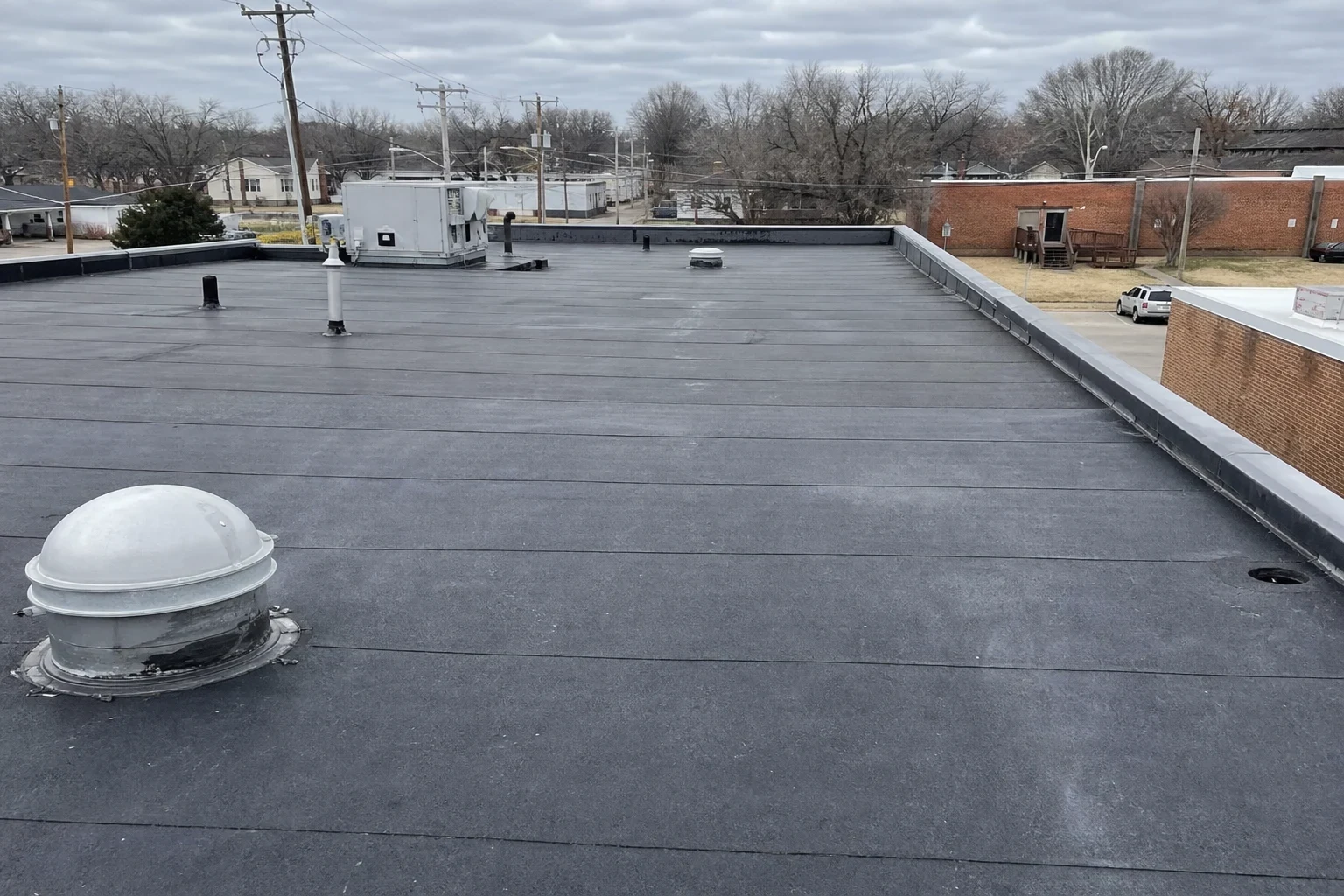
We'll cut cores, show you the layers and tell you plainly whether repair or replacement is the better investment for your building.