ServicesGutters
Gutter Repair and Installation in Blanchard
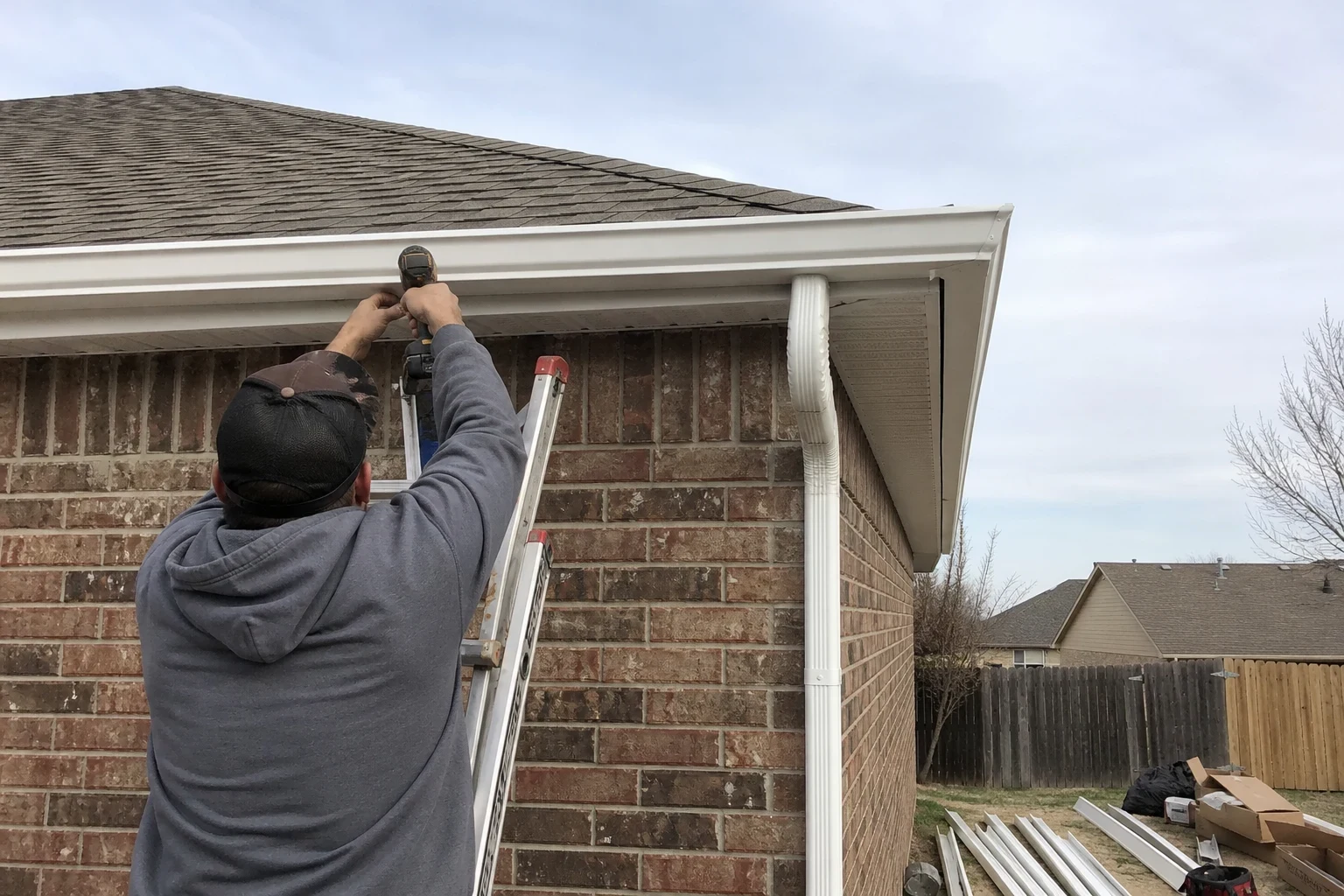
Most gutter problems come down to a failed seam, a loose hanger or a run that lost its slope. We find the cause, fix it when a fix will hold, and tell you plainly when new continuous gutters are the better use of your money.
What gutters do and how they fail
Gutters collect the runoff from your roof and send it to downspouts, which should let it out well clear of the foundation. Working gutters go unnoticed. Failing ones spill water over the fascia, soak the soffit, streak the siding and pool beside the slab, where central Oklahoma's clay soil swells and shrinks with every wet and dry stretch.
The problems usually start small. Sealant at the end caps and miters dries out and cracks. Spike-and-ferrule hangers loosen as the fascia shrinks. A run meant to fall a quarter inch every ten feet settles flat, and water sits in the trough instead of moving. Hail dents catch debris. Most of this can be repaired piece by piece, so that is our starting point.
With an Oklahoma residential roofing license and an Oklahoma general contractor license, a single crew handles the roof edge, the fascia and the gutter instead of three different trades.
Gutter work we handle
- 01
Seam and end cap resealing
We clean old sealant down to bare metal, then reseal leaking joints, miters and end caps with a gutter-grade sealant. On sectional gutters this alone stops many drips.
- 02
Rehanging and re-pitching
Loose spikes come out and hidden hangers go in, screwed into solid fascia and spaced closely enough to carry the weight of wet leaves and ice. We reset the slope so water moves to the outlet.
- 03
Downspout and outlet fixes
Crushed elbows, clogged outlets and short extensions get repaired or swapped. Where a 2x3 downspout cannot keep up with a large roof section, we can upsize to 3x4.
- 04
Fascia and drip edge repair
Rotted fascia cannot hold a hanger. We cut out soft boards, install sound wood, and add or correct the drip edge or gutter apron so water lands in the trough, not behind it.
- 05
New continuous gutter runs
When a system is past repair, we form new gutters on site in continuous lengths, typically 5-inch or 6-inch K-style aluminum, sized to the roof area each run drains.
Questions about Gutters?
Call(405) 477-4813Signs your gutters need attention
Drips at the corners
Water falling from a miter or end cap during rain means the sealant has failed. Caught early, it is a quick reseal.
Water spilling over the front
Overflow points to a clog, an undersized outlet or a run with no slope. Any of the three will keep happening until the cause is fixed.
Sagging or pulling away
A run that dips between hangers, or a gap between the gutter and the fascia, means fasteners have loosened or the wood behind them has softened.
Stains, peeling paint or rotted trim
Dark streaks on siding, peeling soffit paint or soft fascia mean water has been running down behind the trough, often for months.
Trenches or puddles at the foundation
Channels cut into a flower bed, or water pooling against the slab below a downspout, tell you the discharge is landing too close to your home.
How a gutter job runs
- 1
Look at the whole system
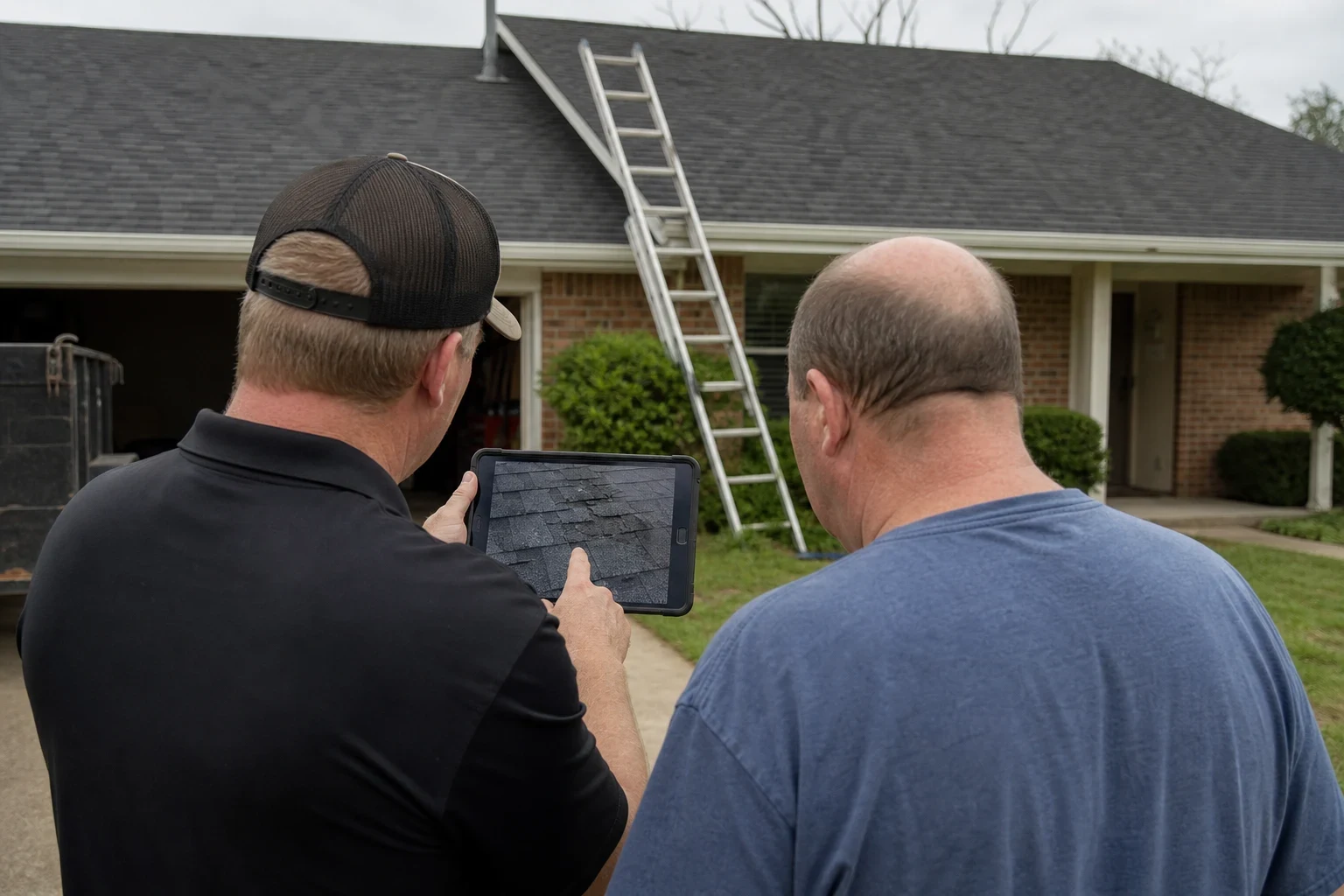
We walk every run, check slope with a level, test seams and hangers, and look at the fascia and roof edge above. You get photos of what we found.
- 2
An honest repair-or-replace answer
If resealing, rehanging and a couple of new sections will solve it, that is what we recommend. If the metal is badly dented, the seams are failing everywhere or the gutters are undersized, we explain why new runs make more sense and give you a written estimate either way.
- 3
The work day
We set ladders with standoffs so they do not crush the gutter, protect beds and walkways below, and remove any rotted fascia before anything new is hung. Most gutter jobs on a typical house take a day or less.
- 4
Flow check and cleanup
Before we pack up, we flush each run with a hose and watch the water reach the outlet and leave the downspout. Old metal, empty sealant tubes and debris go with us.
What moves the price of gutter work
A small repair and a full install of new continuous gutters are very different jobs, so we price from what we see on your home. Your written estimate lists each part of the work separately, so you can tell what is repair, what is new material and what is optional.
- Linear feet and stories
- Total footage sets the material, and second-story runs take more setup and safety work than single-story eaves.
- Repair versus new runs
- Resealing and rehanging cost far less than a new system. We only quote replacement when repairs would not last.
- Fascia condition
- Rotted fascia has to be swapped for sound wood before a gutter can hang on it, and the extent sometimes shows only once the old gutter comes off. We show you before we add it.
- Gutter size and downspouts
- Larger profiles mean more aluminum. A 6-inch trough with 3x4 downspouts takes more material than a 5-inch trough with 2x3, and each corner, outlet and extension adds parts and labor.
Gutter questions we hear
Do my gutters need repair or replacement?
Often a repair will do. Leaking seams, loose hangers and lost slope can be fixed on gutters that are otherwise in good shape. Replacement makes sense when most of the metal is dented, seams fail faster than we can reseal them, or the gutters are too small for the roof.
Are one-piece gutters really better than sectional ones?
The main advantage is fewer joints. A continuous run only has seams at the corners and end caps, so there are fewer places for sealant to fail. Sectional gutters that are well maintained still work, and we won't push you to switch if yours are holding up.
Do I need 5-inch or 6-inch gutters?
It depends on how much roof drains into each run and how steep it is. A big or steep roof plane, or a valley dumping water at one corner, can overrun a 5-inch trough in a heavy spring storm. We measure each section of roof and size the gutter to the water it has to handle.
Why does water run behind my gutter?
Usually the shingles or drip edge stop short of the trough, so water wraps around the edge and down the fascia. Adding or adjusting a gutter apron or drip edge guides it into the gutter. It's a common fix that keeps the fascia from rotting.
Do you check the roof while working on gutters?
We look at the roof edge and the eave shingles, because they decide how water reaches the gutter. If anything there needs more attention, we tell you and can schedule a full roof inspection.

Get your gutters draining again
Tell us what you are seeing, from a drip at a corner to water at the foundation. We will set a time to look, explain what is causing it and give you a written estimate for the repair that fits.