ServicesRoof Replacement
Roof Replacement in Blanchard
We put on a new roof when a repair would only buy you a season or two. We tear off to the decking, fix what is soft, and build a system that sheds water and vents heat properly. First, we tell you plainly whether your home needs one.
When a New Roof Is the Right Call
Most of the roofs we're called to can be fixed. A torn shingle tab, a split rubber pipe boot or a step flashing that has worked loose costs far less to repair than a reroof, and we tell you that up front. Replacement is worth the money when wear covers the whole roof, not one valley or one vent.
Signs of that kind of wear include shingles with most of their granules gone, mats that snap when bent, hail strikes on several slopes, or sheathing that has started to separate after years of small leaks. Hail, strong wind and big daily temperature swings in central Oklahoma wear asphalt out sooner than the rated life on the package. When the whole field is spent, a patch in one spot just sends the next leak somewhere nearby.
Your reroof is done under our Oklahoma residential roofing license, the state credential that applies to work on your home.
Everything a New Roof From Us Covers
- 01
Tear-off to bare sheathing
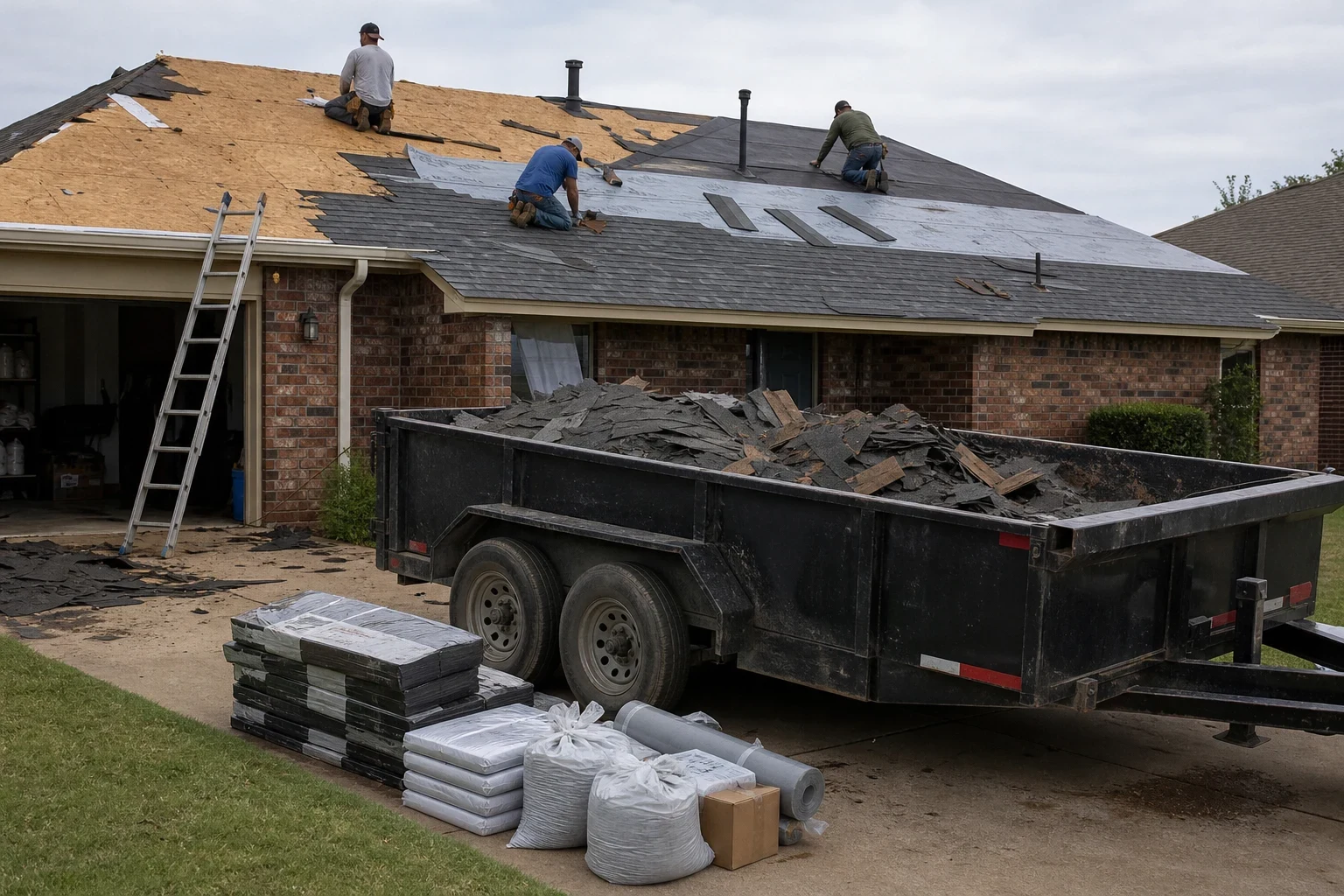
We strip every shingle and every sheet of felt instead of nailing over them. A layer left underneath conceals rot, puts extra weight on the framing and shortens the life of the new shingles.
- 02
Sheathing inspected and swapped as needed
With the wood uncovered, we go over each section and pull any plywood or OSB that is soft or delaminating. Each removed sheet is photographed for you along with why it failed. Because we hold an Oklahoma general contractor license, the same crew can take care of minor structural fixes found under the roof.
- 03
Synthetic underlayment and peel-and-stick
Synthetic underlayment covers the open areas. Self-adhering membrane goes in the valleys, along the eaves and around pipes and vents, where wind-driven rain and ice dams are most likely to force water beneath the shingles.
- 04
All-new flashing
Drip edge, step flashing at sidewalls, chimney flashing and pipe boots are all new. Reused metal that is bent, rusty or punched with old nail holes often causes leaks on a brand-new roof, so we do not put any of it back.
- 05
Balanced attic airflow
We size the soffit intake to the ridge exhaust. When an attic holds heat, it bakes the shingles from below and keeps your air conditioner running harder through the summer.
- 06
Covered beds and a nail sweep
We cover shrubs and flower beds while we work, haul off all debris and run magnets across the lawn and driveway to pick up stray nails.
Questions about Roof Replacement?
Call(405) 477-4813Signs Your Roof Is Ready to Come Off
Bald shingles and granules in the gutters
Granules protect the asphalt from UV. When gutters fill with them and the shingles look smooth or dark in patches, the roof is near the end of its service life.
Curling, cupping or cracked tabs
Edges that curl up or tabs that crack when bent mean the shingles have dried out. Wind lifts them easily, and they no longer reseal.
Hail bruising across several slopes
One damaged area is a repair. Soft spots and fractured mats on most faces of the roof usually point to a full reroof, and often to an insurance claim worth discussing.
Sagging decking or a spongy feel
A dip between rafters or a roof that flexes underfoot means the sheathing has absorbed water over time. That wood has to be cut out, which means the shingles come off anyway.
Repeated leaks in different places
If you have patched three spots in two years, the problem is the system, not the spot. Our roof repair page covers the cases where a fix still makes sense.
How a Reroof Day Runs
- 1
Inspection and a plain recommendation
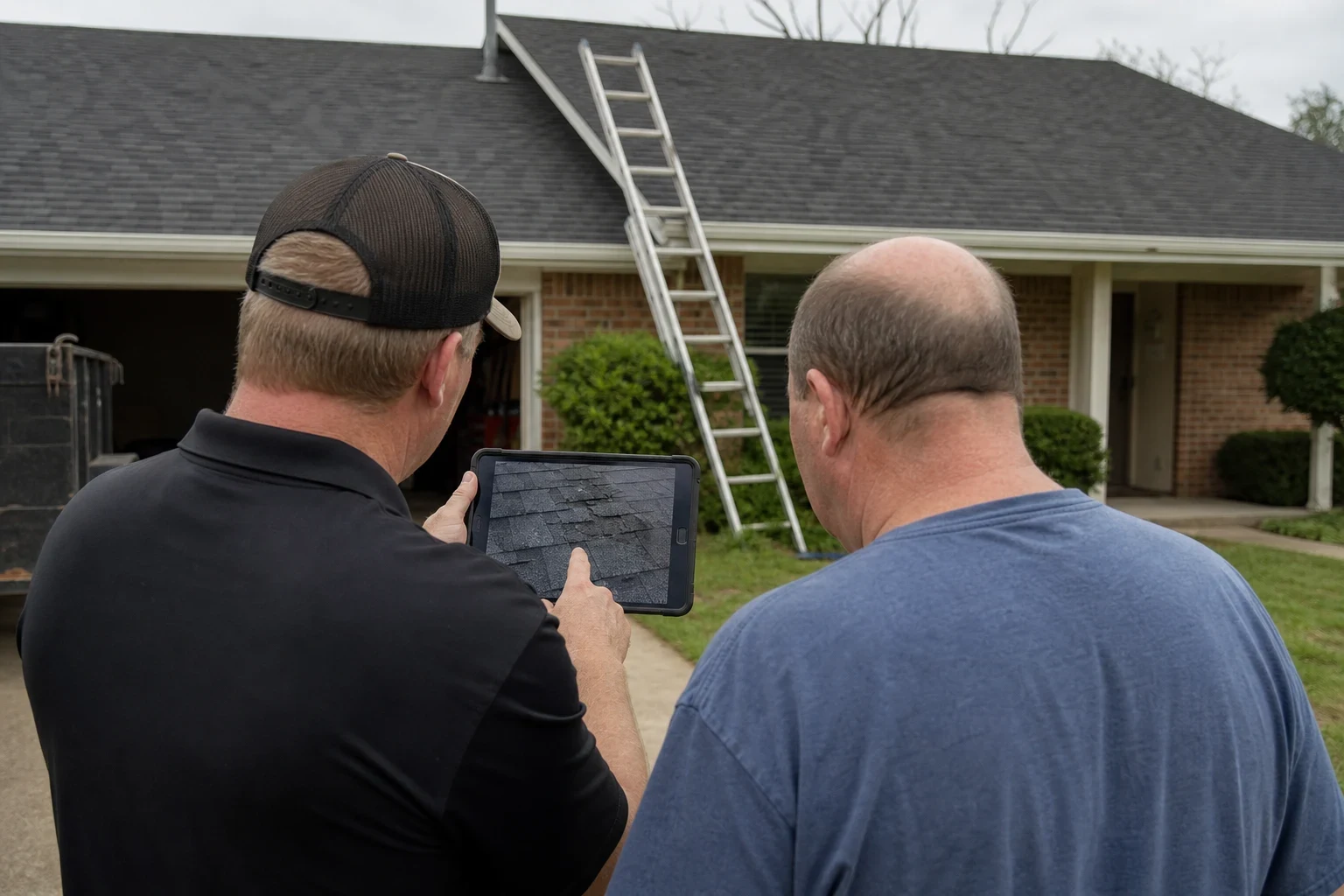
We walk the roof surface and check the attic from the inside if there is safe access. You receive photos and a written, line-item estimate, plus our honest view on whether a repair could do the job instead.
- 2
Materials and permit
You pick the shingle style and color, and we order matching underlayment, flashing and vents. If the job needs a permit, we pull it before the crew arrives.
- 3
Tear-off and decking
Tarps go over flower beds and siding, the old roof comes off, and each sheet of decking gets checked. If we find more bad sheets than the estimate listed, we show you before replacing them.
- 4
Dry-in and installation
Membrane, underlayment, drip edge and flashing are installed first, followed by shingles fastened to the manufacturer's nailing pattern, then the ridge vent and cap shingles. Most homes take a day or two, depending on weather.
- 5
Final walk and cleanup
We sweep for nails with magnets, clear tear-off debris from the gutters and walk you around the finished roof, showing you the new flashing, the vents and any decking we replaced.
What Moves the Cost of a New Roof
The price of a new roof comes from a handful of measurable things, and we list each one on your estimate. The biggest unknown is the decking, which nobody can fully see until the old roof is off. That is why we price extra sheets per unit up front, so there are no surprises later.
- Roof size and pitch
- Price follows the number of squares, with one square equal to 100 square feet. Steep pitches need extra safety setup and slow the crew down.
- Old layers and sheathing
- Every extra layer of old roofing on the house means more labor to strip and more weight to haul away. Each rotten sheet of sheathing adds material and install time.
- Shingle line and components
- Architectural and impact-rated shingles cost more than basic lines. Valleys, skylights, chimneys and dormers each add flashing work.
- Ventilation changes
- Adding ridge vent or soffit intake to correct a poorly vented attic adds cost, but it protects the new shingles from heat damage.
Common Questions About a New Roof
Could you just put new shingles on top of the old roof?
We don't recommend it. An added layer holds heat beneath the new shingles, loads the rafters with more weight and hides decking damage that keeps getting worse. Taking the roof down to bare wood is the only way to find soft sheathing and replace it before the new shingles go down.
How do I know you aren't selling me a roof I don't need?
You see our photos, and we tell you whether the damage is in one area or across every slope. When a repair makes more sense, we say that and price the repair. If you'd like a separate look first, you can book just a roof inspection.
Will my insurance cover hail damage?
Coverage is set by your policy and your adjuster, not by a roofer. We can photograph the damage, explain what it means for the roof and be at the house when the adjuster comes if you want. Our storm damage repair page describes how claims usually go.
Does someone have to be home while you work?
No, as long as someone picks up the phone if the decking turns out worse than we expected. Tear-off is loud, and the pounding can knock pictures and mirrors off upstairs walls, so take them down before we start.
Should I get new gutters at the same time?
If they sag, pull away from the fascia or spill over in heavy rain, replacing them now saves labor since the drip edge is already coming off. Gutters still in good condition stay in place and get protected. Our gutters page shows what we install.
Find Out Whether You Need a New Roof
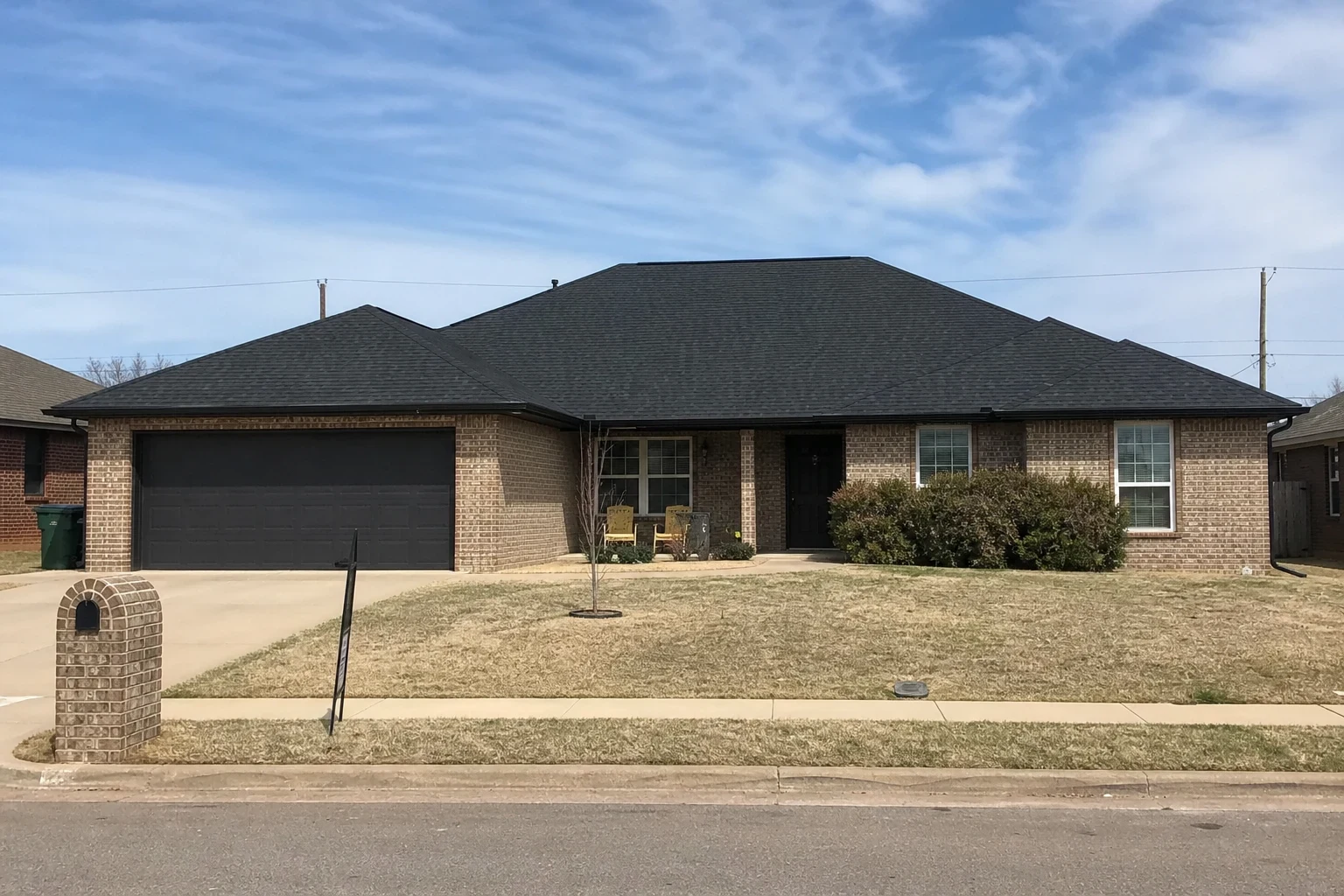
We climb up, photograph what we find and give you a straight answer on whether a fix will hold or the whole roof has reached its limit. We serve Blanchard and nearby towns like Newcastle, Tuttle and Mustang.