ServicesRoof Repair
Roof Repair in Blanchard, OK
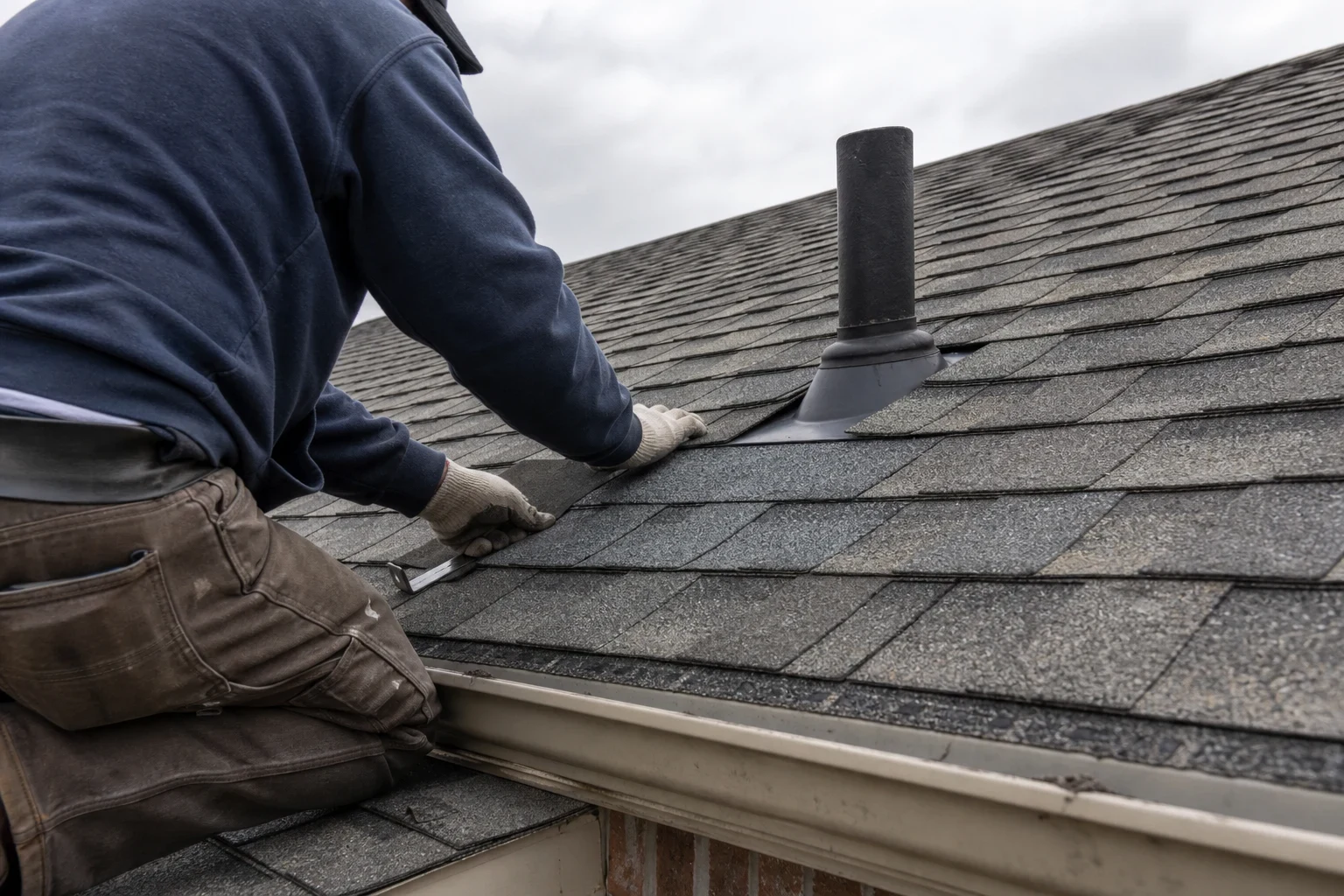
Most leaks start at one weak point: a cracked pipe boot, a loose step flashing, a few shingles that lost their seal. We trace the water to that point, fix it with matching materials, and tell you honestly if the roof is past the stage where repair makes sense.
Fixing the failure point, not the whole roof
Water gets into a roof where the shingle field is broken up: plumbing vents, chimneys, skylights, valleys and the joints where a slope meets a sidewall. Those spots depend on flashing, sealant and rubber that age faster than the shingles around them. If the rest of the field still holds its granules, lies flat and stays sealed down, fixing that one detail is the sensible spend. Repair is where we start, and we offer it as the answer, not as an opening for a bigger sale.
The math changes when the shingles themselves are worn out. Bald patches where granules have washed off, tabs that snap when lifted, or soft decking in several areas tell us the roof is near the end of its life. In that case we show you photos and explain why another patch would likely last a season or two at most. Our Roof Replacement page covers what that next step looks like.
We hold an Oklahoma residential roofing license, and every repair on your home goes in to the same installation standard we follow on a full new roof.
What goes into one of our repairs
Finding the entry point
When we can get into the attic, we start there. Water tends to travel a few feet along a rafter or the sheathing before dripping, so the ceiling stain is rarely directly under the hole. We trace the marks upslope until we find where the water really enters.
Shingle work
Shingles that are creased, torn or gone get replaced, and we seal the tabs around them by hand. We match the profile and color as closely as today's product lines allow and tell you about any visible difference before work begins.
Pipe boots and vents
After enough Oklahoma summers, the neoprene collar on a plumbing vent dries and cracks, leaving an opening right where water flows down the roof. It is one of the most common problems we see. We fix it with a new boot or flashing unit, not a line of sealant that will crack again within a year.
Flashing and valleys
Step flashing along sidewalls, counterflashing on chimneys and open valley metal get reset or replaced. Caulk by itself does not count as a flashing repair, and we never use it as one.
Decking under the damage
When the plywood or OSB beneath a leak has rotted or separated, we remove that piece and put in new sheathing before the shingles go back on. Our Oklahoma general contractor license covers structural work like this when it reaches past the roof surface.
Warning signs worth a closer look
Water marks overhead
Tan rings or bubbling paint on a ceiling mean water has already soaked through the drywall. The entry point may be small, but wet insulation stays wet, so finding the source soon limits the damage.
Shingles lifted or missing
High spring winds can break the adhesive strip and fold shingles back. Once the seal lets go, the next gust can tear them off and expose the underlayment.
Granules in the gutters
Some shedding is normal on a new roof. Heavy piles of gritty granules on an older roof mean the asphalt is exposed to UV and aging faster.
Daylight or damp wood in the attic
Pinpoints of light through the decking, dark wet spots on the sheathing, or a musty smell all point to a breach above.
Rust or gaps at flashing
Look where the roof meets a wall or chimney. Rusted, bent or separated metal lets wind-driven rain get behind the shingles.
How a repair visit runs
- 1
You call and describe the problem
Tell us where the stain is, when it shows up and what the weather was doing. A leak that appears only in a driving rain points to a different cause than one that shows up after every shower.
- 2
We inspect inside and out
We check the attic, then walk the roof if it is safe to do so. You get photos of what we found and a clear explanation of the cause.
- 3
You get a written estimate
The estimate lists each repair item and the materials involved. If we think a new roof is the better value, we say so and explain the reasoning, and you decide.
- 4
We make the repair
Most repairs take a few hours. We protect landscaping below the work area, pull old nails and flashing, and install new material to manufacturer specifications.
- 5
Cleanup and a final look
We run a magnet over the yard and driveway for loose nails, haul off the debris and show you photos of the finished work.
What affects the cost of a roof repair
We price a repair by what it takes to fix the cause, not by a flat fee. A ceiling stain of a given size can trace back to one cracked boot or to a rotted section of decking, and the work and the price follow whatever is actually up there. We quote after we have seen the roof, with every item written out.
- Where the damage is
- A boot on a low, walkable slope is quicker than flashing at a second-story chimney. Steep pitches need extra safety setup and more time.
- Condition of the decking
- Sound sheathing means we only work on surface materials. Rotted decking adds cutting, new panels and fasteners.
- Materials and matching
- Widely stocked architectural shingles are simple to get. Older discontinued lines, metal panels and custom-bent flashing can take time to track down and usually add cost.
- How many trouble spots there are
- Fixing three vents in one visit costs less per item than three separate trips. If our inspection turns up a second problem, we list it separately so you can choose.
Roof repair questions
Something not covered here? (405) 477-4813
Can you fix only the area that leaks?
Most of the time, as long as the shingles around it are still sound. We replace the part that actually failed, such as a boot or a piece of flashing, instead of smearing sealant over it. When the nearby shingles are brittle or worn through, a patch won't last, and we'll be upfront about that.
Should I repair my leaking roof or replace it?
The answer comes from the condition of all the shingles, not from how bad the leak seems. A single failed boot on a healthy roof calls for a repair. When large areas have lost their granules, tabs are curling, or several spots fail at the same time, patch money tends to vanish and a new roof is the smarter investment. We share photos so you see what we see.
Will new shingles match the rest of my roof?
When your shingle is still made, we order the same line, profile and color. Years of sun fade shingles, so even the exact product may look slightly different until it weathers. When the line has been discontinued, we bring the nearest match and go over the difference with you before we begin.
Is a repair something to file with insurance?
Damage from hail or wind may be covered, and our Storm Damage Repair page walks through how that works. Leaks from wear, like an old pipe boot, usually are not covered. We can record what we find in any case, but the adjuster decides coverage.
Will you repair roofs beyond Blanchard?
We will. Newcastle, Tuttle, Mustang and Moore are regular stops for us, along with other nearby towns.
Get the leak traced to its source
Tell us what you are seeing and when it happens. We will set a time to inspect and give you a written answer on whether a repair will hold.